Someone to think with.
Existentially-grounded, politically-aware coaching for people in genuinely complex situations: displacement, identity, belonging, the loss of a faith or a homeland, the slow work of becoming someone new. Not therapy, and not pretending the world you’re in is simpler than it is.
Much of this is territory I’ve lived, not only worked in. It’s a flavour of who comes, not a checklist, so if your version of it isn’t named here it most likely still belongs. It tends to suit people who are reflective, sitting with something genuinely complex, and not after a quick answer.

What looks like a personal crisis is often a coherent response to an impossible situation.
Suffering is rarely only personal. It’s shaped by history, politics, culture, displacement, and the stories you were handed about who you are and what you’re allowed to feel. This work starts there, with you in your world, not a symptom in isolation. The aim isn’t to fix the impossibility. It’s to find a way of living within it that’s honest and more your own.
Six to twelve sessions, with a shape.
A defined piece of work with an ending built in, not an open-ended commitment. Underneath it are four orientations and a rough arc across the sessions.
The four moves
Not sequential steps. They’re orientations that shift with what the person needs. A session might move through all four or stay in one. Named for clarity, not prescription.
Move oneGroundWho are you in your world?
Before anything else, context. Not just the presenting situation but the forces shaping it: historical, political, cultural, familial. What has this person been thrown into that they didn’t choose? What is the world they’re actually in like, not the sanitised version? This move refuses the decontextualised presenting problem. It also builds the genuine contact that makes everything else possible. No work happens before real contact is made.
Theoretical anchorsExistential thrownness · Maté’s systemic lens · Mullan’s politicised container · Freire on context
Move twoSitWhat does it feel like to not-know?
Ambiguity as the actual territory, not the problem to be solved. The work here is companionship in uncertainty rather than guidance toward resolution. Staying longer than feels productive. Not filling the silence with solutions. The body comes in atmospherically rather than as technique, noticing when language changes texture, when someone goes quiet, when something shifts in the room. Naming what’s observable without probing inward. ‘You went quiet there’ rather than ‘where do you feel that’.
Theoretical anchorsTillich’s courage to be · Gendlin’s felt sense · Hübl on the unprocessed present · Menakem on the body holding what words cannot
Move threeReframeWhat if it looked like this instead?
Offering angles, never conclusions. The dialogical self is useful here: which I-position is speaking right now, are there others? Parts language: what does that part of you need, what are the other parts saying? This is where lived range does the most work. Having inhabited multiple worlds, languages, identities and faith systems, and having genuinely lost and rebuilt, means seeing possibilities that aren’t always obvious from a single vantage point. This isn’t expertise deployed. It’s experience offered.
Theoretical anchorsHermans’ dialogical self · Schwartz’s parts · Narrative re-authoring · Existential meaning-making · Frankl without the uplift
Move fourName the systemicThis is not only yours to carry.
Locating personal experience in structural context, explicitly. What is this person carrying that was handed to them, by colonialism, by war, by religion as institution, by patriarchy, by displacement? Reducing the shame load by relocating suffering more accurately. Lorde’s anger framework is useful here: when rage appears, rather than managing it, asking what it’s pointing at. Rage as politically accurate response. Conscientisation, in Freire’s sense, as the moment of seeing clearly.
Theoretical anchorsLorde · Mullan · Menakem · Freire’s conscientisation · Fanon · Volkan on collective wounds
The arc across the sessions
Not a fixed structure, more a rough shape across six to twelve sessions. You double back, themes recur. A guide, not a schedule.
This isn’t about ending up resolved. It’s carrying your own complexity with more clarity and less shame than when you started.

Coaching, not therapy.
An honest distinction, kept on purpose.
I’m not a registered psychotherapist and I don’t offer therapy. This is coaching: educational, reflective, bounded in time, and clear about what it does and doesn’t do.
It doesn’t go digging. It won’t excavate buried trauma or treat what you bring as pathology. If something surfaces that needs deeper therapeutic work, I’ll say so plainly and point you toward the right person.
It isn’t quick-fix coaching either. No rushed action plans, no goal-setting for its own sake. If that’s what you want, someone else will suit you better.
And it isn’t neutral. It takes the view that suffering is shaped by context and power, and that the frameworks we use to understand distress carry their own histories. If you’d rather a practitioner who stays out of all that, this won’t be the right fit.
It also isn’t a crisis or emergency service. If you’re in crisis, or worried about your immediate safety, please contact your GP, call NHS 111, or reach the Samaritans free on 116 123, at any hour.
Clear prices, plainly.
Most people start with a conversation, then commit to the arc.
A proper talk to see whether this is the right fit and the right time. No obligation to carry on, and no charge for finding out.
One session at a time, online. Useful if you want to start before committing to a block.
The whole piece of work, booked as a block. The way most of this is best done, with the shape and the ending agreed at the start.
Sessions are online, in English or German. I keep a couple of reduced-fee places for people who can’t meet the full rate, just say so when you get in touch.
Booking and payment are handled at the point you book. Sessions cancelled with less than 48 hours’ notice are charged in full.
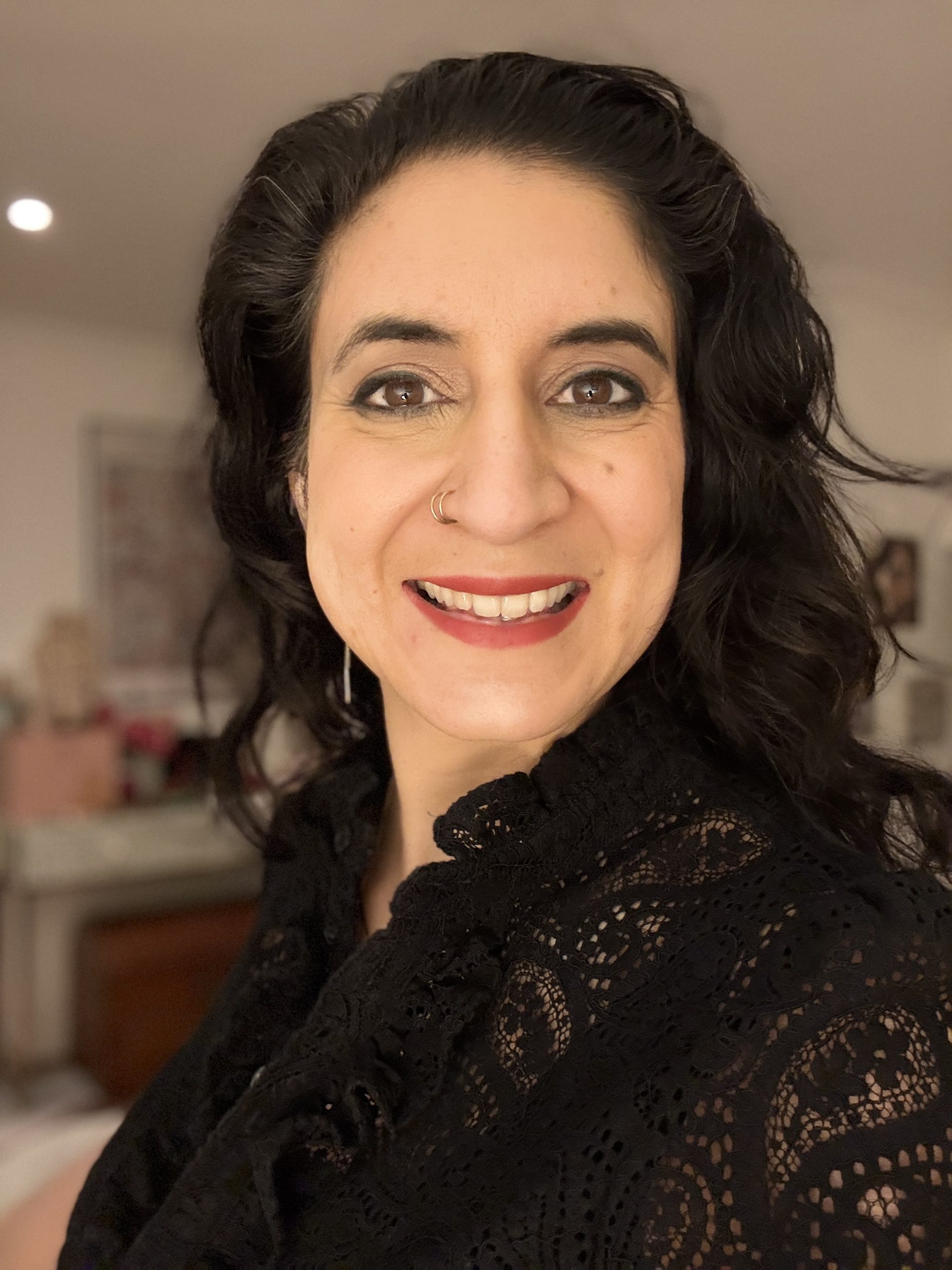
More than one language, more than one culture, more than one world inhabited from the inside rather than observed from outside. I was raised between northern Pakistan and Germany by German medical humanitarians, came to England for university, and have since lived in France, Spain, the United States, Australia and Tanzania.
In my thirties I lived and worked in Kabul, teaching and running education and communications projects through some of the harder years. Displacement, faith deconstruction, diasporic identity, the question of where home is and whether it can be remade: I’ve spent my life in that territory. The capacity to sit with genuine complexity without rushing to resolve it comes from having had to do exactly that, repeatedly, without a map.
MSc in Existential Psychotherapy, Middlesex University. Honours degree in Theology, Brunel. Lecturer and research supervisor at postgraduate level, supervising autoethnographic and qualitative work. Published on identity and belonging among global nomads (APA, 2008), and presented on transracial adoption, cosmopolitanism and hybridity at the Royal Anthropological Institute.
English and German are my mother tongues, and I’m fluent in French and Urdu. The lens is decolonial, feminist and liberation-informed. I’m not a registered psychotherapist in the UK and I don’t offer therapy. What I offer is someone who can think with you, not at you or for you, in the difficult business of being human in a complicated world.
My work focuses on complexity, identity, displacement, and the slow work of becoming.
Is this therapy?
No. I’m not a registered psychotherapist and I don’t offer therapy. This is bounded, educational, reflective coaching. If deeper therapeutic work is needed, I’ll tell you and help you find the right person.
How long does it run?
Six to twelve sessions, agreed at the start. It has an ending built in rather than running on indefinitely.
Do I need to know what I want to work on?
No. We start from wherever you are. Working out what’s actually at stake is part of the work, not a prerequisite for it.
Where does it happen?
Online, by video, wherever you are. In English or German.
Start with a conversation.
Everything begins with a free 30-minute conversation. No obligation, just a chance to see whether this is the right work and the right time. If it is, we take it from there.
Book a free conversationExistentially-grounded · Online, in English and German
ThirdSpacePractice Ltd · Registered in England and Wales, company no. 16688808
Registered office: 128 City Road, London EC1V 2NX
© ThirdSpacePractice Ltd 2026. All rights reserved.